In a meeting with artificial intelligence (AI) startups in Vietnam on January 16, 2026, Minister of Science and Technology Nguyễn Mạnh Hùng emphasized that startups hold a fundamental advantage over large, established companies - they are allowed to fail. Instead of avoiding mistakes, startups survive and thrive by failing quickly and learning from each experience, becoming smarter and more self-aware along the way.
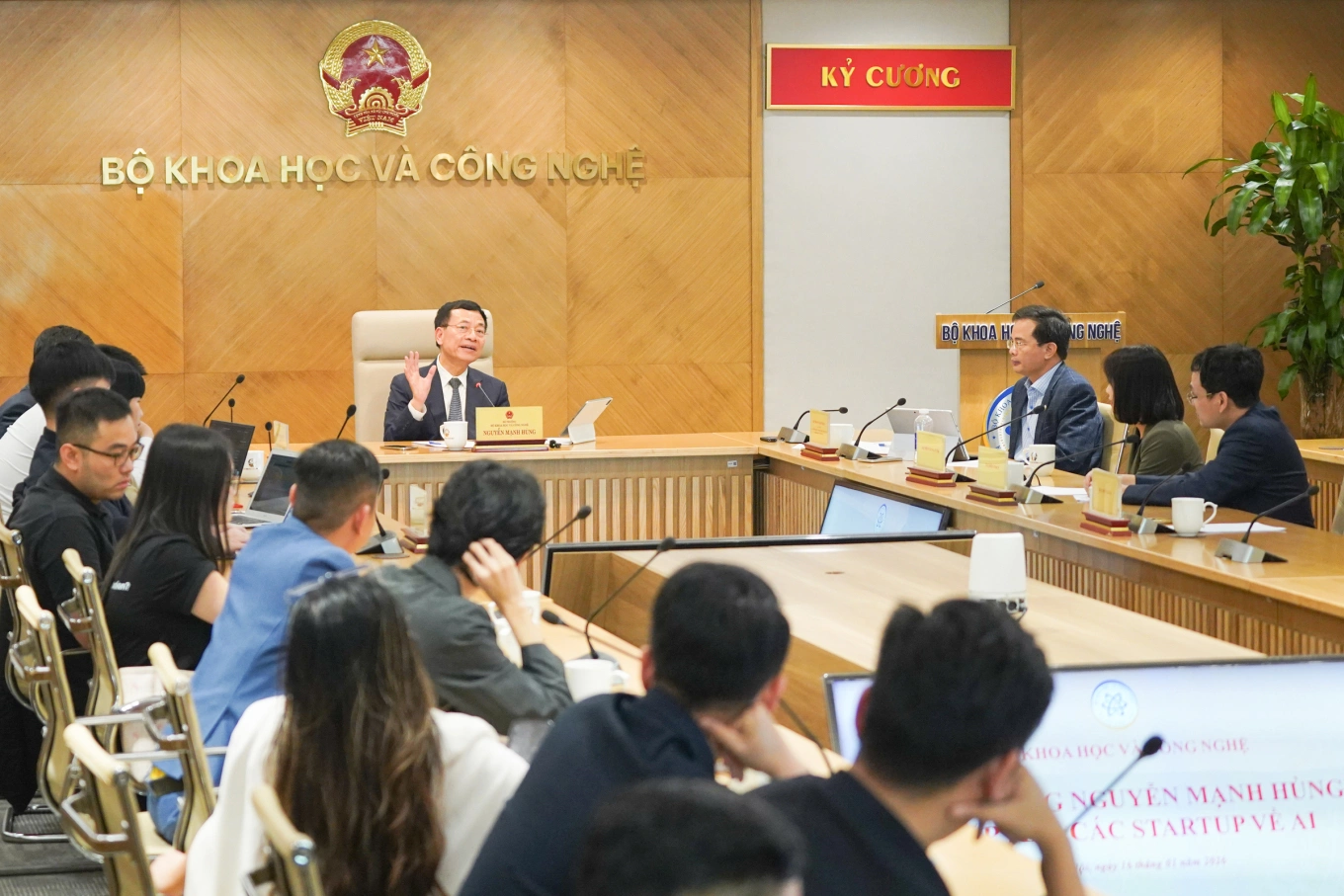
“Startups aren’t the same as businesses,” the minister said, challenging the common misconception that the two are identical. While traditional businesses aim to optimize and stabilise known models, startups exist to search for new models that have never been tried before.
The “Search” Nature of Startups
Drawing on definitions from global startup thinkers, the minister referenced Paul Graham, co-founder of Y Combinator, who described a startup as “a company designed to grow fast” - implying non-linear growth once a new business model is discovered. He also cited Steve Blank, who called a startup “a temporary organization designed to search for a repeatable and scalable business model.” According to this view, a startup is not meant to look like a traditional enterprise until it finds that model and transforms into a fully scaled business. If it doesn’t find one, it will simply cease to exist.
The key distinction between a startup and an established business lies in risk tolerance and flexibility. Large companies are structured for stability - they plan around long-term strategies, multi-year goals, KPIs and risk management. In that world, mistakes are treated as errors. Startups, by contrast, operate with hypotheses that may change in weeks, and management is measured by learning capacity, with failure serving as useful data, not a blemish. In this environment, releasing a product that isn’t perfect is seen as part of rapid learning.
As LinkedIn co-founder Reid Hoffman famously said:
“If you are not embarrassed by the first version of your product, you've launched too late.”
Startups therefore are not afraid of early flaws - they are afraid of not learning from them.
Different Approaches to Risk
While big companies focus on reducing risk, startups are built to explore and embrace risk. If the market, technology, and customer needs are already clear, then no unique opportunity exists for a startup - such conditions favor established companies. Big companies focus on scaling existing solutions efficiently, whereas startups search for entirely new answers.
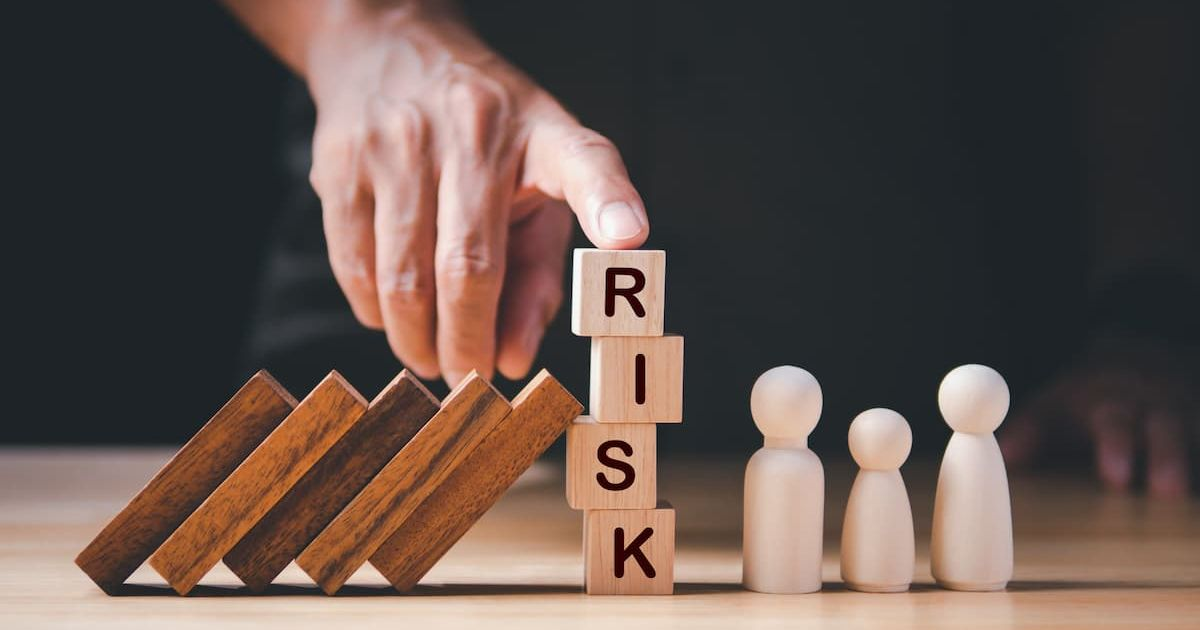
Startups often operate without long-term strategic planning. In environments of high uncertainty — what some entrepreneurs describe as “the fog” - traditional strategy may be less relevant than the ability to test, learn, and pivot.
Adaptability as Core Strength
The minister underscored that the real strength of startups over large corporations is their capacity to pivot quickly. A big company can survive slow movement; a slow startup may not survive at all. Conversely, established enterprises cannot pivot rapidly due to scale and internal structures. This nimbleness - the ability to change direction, experiment boldly or even admit when something doesn’t work - is the core competitive advantage startups possess.
The Philosophy Behind Startup Culture
Beyond operational differences, Nguyen framed the startup journey as a distinct philosophy about innovation and risk. Unlike large firms that optimize existing structures, startups thrive in uncertain spaces where few understand the problem or dare to try novel solutions. They often begin with a sense of solitude - without early believers or paying customers - relying on the founder’s conviction in the idea itself. According to Nguyen, enduring this loneliness and continuing to learn from failures is essential before others will follow.
This philosophical lens reframes failure not as a dead end, but as a necessary step toward clarity and discovery - and ultimately, toward scalable impact.

![[Expert Views] 2026 Is The Golden Time To Elevate Thinking About Leadership Presence](https://vcystvqnqlquncjkhfqk.supabase.co/storage/v1/render/image/public/cm86yzxje006dqu90iz4rc2vg/Users/499567_imagejpeg?width=600&quality=80&resize=contain)
![[Latest News] Ho Chi Minh City Allocates Over VND 1,600 Billion to Support Data Cleanup Workforce](https://vcystvqnqlquncjkhfqk.supabase.co/storage/v1/render/image/public/cm86yzxje006dqu90iz4rc2vg/Users/928915_imagejpeg?width=600&quality=80&resize=contain)
![[Latest News] CODE; WITHOUT BARRIERS – ASEAN MENTORING PROGRAM IS BACK](https://vcystvqnqlquncjkhfqk.supabase.co/storage/v1/render/image/public/cm86yzxje006dqu90iz4rc2vg/Users/753294_imagejpeg?width=600&quality=80&resize=contain)
![[Advisor Spotlight – Voices of Impact] Presenting Ms. Khổng Loan, Strategic Leadership Communication Advisor | Founder, Spokesperson Training Vietnam](https://vcystvqnqlquncjkhfqk.supabase.co/storage/v1/render/image/public/cm86yzxje006dqu90iz4rc2vg/Users/59432_imagejpeg?width=600&quality=80&resize=contain)
![[Latest News] China Generates Massive Electricity by Burning Waste](https://vcystvqnqlquncjkhfqk.supabase.co/storage/v1/render/image/public/cm86yzxje006dqu90iz4rc2vg/Users/907423_imagejpeg?width=600&quality=80&resize=contain)
![[Latest News] Startups Have an Advantage Over Big Companies Because They Are Allowed to Fail, Says Vietnamese Minister](https://vcystvqnqlquncjkhfqk.supabase.co/storage/v1/render/image/public/cm86yzxje006dqu90iz4rc2vg/Users/291620_imagejpeg?width=600&quality=80&resize=contain)
![[Latest News] Trump Proposes Fast-Track Nuclear Power Licensing for Tech Firms to Support AI Growth](https://vcystvqnqlquncjkhfqk.supabase.co/storage/v1/render/image/public/cm86yzxje006dqu90iz4rc2vg/Users/876683_imagejpeg?width=600&quality=80&resize=contain)
![[Latest News] Vietnam Breaks Ground on Its First Semiconductor Chip Manufacturing Plant](https://vcystvqnqlquncjkhfqk.supabase.co/storage/v1/render/image/public/cm86yzxje006dqu90iz4rc2vg/Users/690226_imagejpeg?width=600&quality=80&resize=contain)
![[Latest News] Key Activities at the ASEAN Digital Ministers’ Meeting](https://vcystvqnqlquncjkhfqk.supabase.co/storage/v1/render/image/public/cm86yzxje006dqu90iz4rc2vg/Users/986198_imagejpeg?width=600&quality=80&resize=contain)
![[Latest News] AI Competition for Young People Kicks Off in Vietnam](https://vcystvqnqlquncjkhfqk.supabase.co/storage/v1/render/image/public/cm86yzxje006dqu90iz4rc2vg/Users/930553_imagejpeg?width=600&quality=80&resize=contain)